20 Jaw-Dropping Canadian Viewpoints That Will Make You Rethink the Map — Which One Will Change How You See the Country?
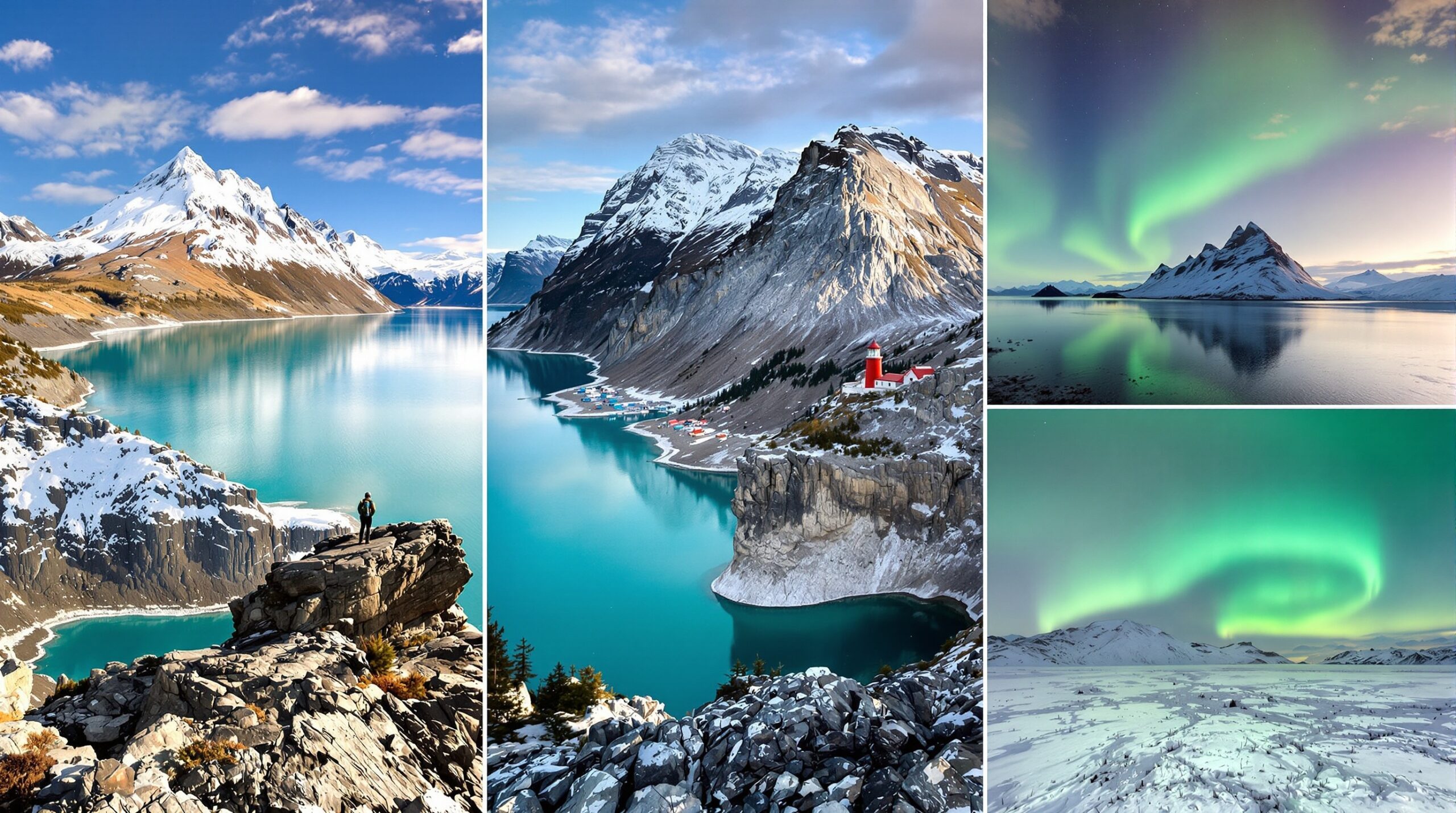
The 20 Best Viewpoints in Canada (and How to Get the Most From Each)
Canada is enormous — and its best vistas feel like different planets. From turquoise alpine lakes hemmed in by jagged peaks to ocean cliffs lashed by fog, and from fjords that swallow the horizon to skies lit by the aurora, these viewpoints will give you the kind of postcard shots and soul-stopping moments that travel memories are made of.
Below: 20 must-see viewpoints across provinces and territories, with exactly why to go, how to reach them, when to visit, difficulty, and quick photography or safety tips.
1. Moraine Lake — Valley of the Ten Peaks (Banff, Alberta)
- Why go: Iconic turquoise lake framed by dramatic glaciated peaks — the classic Canadian Rockies image.
- How to get there: 20-minute drive from Lake Louise; parking fills early (seasonal shuttle often required in summer).
- Best time & tip: Early morning for reflection shots and soft light; late September for fewer crowds and fall colors.
- Difficulty/accessibility: Easy short hike up the Rockpile viewpoint (not wheelchair accessible).
- Photography: Wide-angle from the rockpile; use a polarizer to deepen the lake color.
2. Peyto Lake / Bow Summit (Icefields Parkway, Alberta)
- Why go: Wolf-shaped turquoise lake visible from a high, dramatic outlook — especially vivid after snowmelt.
- How to get there: Located on the Icefields Parkway (Hwy 93) between Banff and Jasper.
- Best time & tip: Mid-summer to early fall; arrive at sunrise to avoid tour bus crowds.
- Difficulty/accessibility: Short paved path from parking lot to the viewpoint (moderate accessibility).
3. Sulphur Mountain Gondola Summit (Banff, Alberta)
- Why go: 360-degree panoramas over Banff, Bow Valley and surrounding peaks — accessible by gondola.
- How to get there: Banff townsite; gondola ride to the summit.
- Best time & tip: Sunset for warm light on mountains; stargazing after dark when open.
- Difficulty/accessibility: Wheelchair accessible summit boardwalk.
4. Columbia Icefield — Glacier Skywalk (Icefields Parkway, Alberta)
- Why go: Glass-floored cantilever overlooks a glacial valley — visceral sense of scale and geology.
- How to get there: Visitor Centre off Hwy 93, guided tours and viewpoints.
- Best time & tip: Summer months for ice access; bring layers — it’s cold on the glacier.
- Difficulty/accessibility: Some accessible areas; check operator details.
5. Lake Louise Shoreline & Plain of Six Glaciers Tea House (Alberta)
- Why go: Iconic glassy lake backed by the Victoria Glacier; hike to tea house for higher vantage points.
- How to get there: Lake Louise village; shoreline is walkable, tea house is a 2–3 hour round-trip hike.
- Best time & tip: Autumn or early morning for serenity; tea house closes in winter.
- Difficulty/accessibility: Shoreline is easy; tea house hike is moderate.
6. Sea-to-Sky Gondola & Stawamus Chief Lookouts (Squamish, British Columbia)
- Why go: Towering fjord views across Howe Sound stretching to Vancouver Island, plus cliff-top panoramas from the Chief.
- How to get there: 45–60 minutes north of Vancouver on Hwy 99; Gondola at Sea-to-Sky, or hike the Chief trails.
- Best time & tip: Spring–fall; bring wind protection for ridge-top viewpoints.
- Difficulty/accessibility: Gondola summit is accessible; Chief trails are steep and strenuous.
7. Garibaldi Lake / Panorama Ridge (Garibaldi Provincial Park, BC)
- Why go: Electric-blue glacial lake nested below snow-capped ridges with jaw-dropping alpine panoramas.
- How to get there: 1.5–2 hour drive from Vancouver, then multi-hour hike (round-trip varies by trail).
- Best time & tip: July–September for thawed trails; overnight camping at Taylor Meadows for sunrise shots.
- Difficulty/accessibility: Demanding backcountry hike; prepared hikers only.
8. Joffre Lakes Upper Viewpoint (BC)
- Why go: A trio of tiered turquoise lakes and hanging glaciers — photogenic and relatively accessible.
- How to get there: Hwy 99 between Pemberton and Lillooet; moderate hike to Upper Lake.
- Best time & tip: Weekdays early summer to avoid crowds; insect repellent required mid-summer.
- Difficulty/accessibility: Moderate to strenuous, exposed sections.
9. Cypress Mountain Lookout (Vancouver, BC)
- Why go: Panoramic viewpoint over Vancouver, False Creek and the Gulf Islands — superb for sunset and city-night shots.
- How to get there: Short drive from Vancouver; various pull-outs and viewpoints at the Cypress Mountain area.
- Best time & tip: Autumn and winter for snow-dusted cityscapes; use telephoto to compress city/island layers.
- Difficulty/accessibility: Easy access to main viewpoints.
10. The Skyline Trail — Cape Breton Highlands National Park (Nova Scotia)
- Why go: Coastal headlands dropping to the Atlantic — dramatic cliffs and whale/porpoise watching from the trail.
- How to get there: Cabot Trail, near Ingonish; iconic 7.5 km loop.
- Best time & tip: Late summer–early fall for warm weather and buggy-free conditions.
- Difficulty/accessibility: Moderate; parts on boardwalk are accessible.
11. Peggy’s Cove Lighthouse & Coastal Cliffs (Nova Scotia)
- Why go: Classic Atlantic coastline with weathered granite outcrops and a photogenic red-and-white lighthouse.
- How to get there: ~45 minutes from Halifax; small parking lot and short walk.
- Best time & tip: Overcast or stormy skies add mood; DO NOT climb the wet rocks — tides and waves are dangerous.
- Difficulty/accessibility: Easy access, but watch footing on wet rock.
12. Gros Morne — Western Brook Pond Fjord & Lookout (Newfoundland & Labrador)
- Why go: Dramatic fjord carved by glaciers; sheer cliffs plunge into inky water.
- How to get there: Boat tours depart from the dock at Western Brook Pond; short boardwalk to the viewing area.
- Best time & tip: Mid-summer to early fall; morning light is beautiful in the fjord.
- Difficulty/accessibility: Boat tour accessible; boardwalks well-maintained.
13. Signal Hill — St. John’s Overlook (Newfoundland & Labrador)
- Why go: Historic hill overlooking St. John’s harbor and the Atlantic — dramatic cliffs and colorful row houses below.
- How to get there: Short drive or walk from downtown St. John’s.
- Best time & tip: Bright windy days give great visibility; winter sunsets are dramatic.
- Difficulty/accessibility: Easy paths with interpretive signs.
14. Hopewell Rocks / Bay of Fundy (New Brunswick)
- Why go: Towering tidal “flowerpot” rock formations and the world’s highest tides create unique seascapes.
- How to get there: Along the Bay of Fundy, ~1.5 hours from Moncton; guided timing required to walk the ocean floor at low tide.
- Best time & tip: Check tide tables; low tide gives dramatic canyon-like shots, high tide creates seascape compositions.
- Difficulty/accessibility: Boardwalks and viewing platforms; ocean floor access on guided walk only.
15. Niagara Falls — Table Rock & Skylon Tower (Ontario)
- Why go: One of the world’s most powerful waterfalls — feel the spray and witness immense scale.
- How to get there: Niagara Falls city; observation decks at Table Rock and Skylon Tower.
- Best time & tip: Visit at night for illuminated falls, or early morning for misty scenes and fewer crowds.
- Difficulty/accessibility: Highly accessible; many viewing platforms.
16. Scarborough Bluffs (Toronto, Ontario)
- Why go: Dramatic clay cliffs dropping into Lake Ontario with sandy beaches and parkland.
- How to get there: East Toronto along the lakeshore; several parks and lookout points.
- Best time & tip: Golden hour for warm light on the cliffs; avoid eroded cliff edges and signage-restricted sections.
- Difficulty/accessibility: Easy access to several lookouts; some trails are steep.
17. The Cup and Saucer Trail / Blue Sky Tower (Manitoulin Island, Ontario)
- Why go: Exposed rock ridges and panoramic Georgian Bay views — a hidden gem for Ontario vistas.
- How to get there: Manitoulin Island, accessible by ferry or bridge depending on season; moderate hike to viewpoints.
- Best time & tip: Summer to early fall; watch for thunder in exposed areas.
- Difficulty/accessibility: Moderate hike with some scrambling.
18. La Cloche Silhouette Trail / Silver Peak (Killarney, Ontario)
- Why go: Jagged white quartzite ridges above cobalt lakes — the La Cloche Range is a photographer’s dream.
- How to get there: Short drive from Killarney Provincial Park; multiple trail options including short lookouts.
- Best time & tip: Fall colors in September; lightning can come up fast in summer.
- Difficulty/accessibility: Moderate to strenuous depending on route.
19. Tombstone Territorial Park & Dempster Highway Views (Yukon)
- Why go: Rugged tundra, serrated peaks and autumn tundra color — remote Arctic-alpine beauty.
- How to get there: Off the Dempster Highway near Dawson City/Klondike region; long drives and backcountry access.
- Best time & tip: Late August–early September for peak fall color and fewer bugs.
- Difficulty/accessibility: Remote backcountry; prepare for self-sufficiency and sudden weather.
20. Yellowknife & the Aurora Over Great Slave Lake (Northwest Territories)
- Why go: One of the best places on Earth to watch the Northern Lights — reflective lake and dark skies amplify the show.
- How to get there: Fly to Yellowknife; local aurora tours and lakeside cabins available.
- Best time & tip: Peak aurora season is mid-August to April; winter offers long nights and stunning ice formations.
- Difficulty/accessibility: Easy to access viewing spots; cold-weather gear essential.
Quick Weekend Itineraries (pick one)
- Rocky Mountain Classic (3–5 days): Banff (Lake Louise, Moraine Lake, Sulphur Mountain) → Icefields Parkway (Peyto, Columbia Icefield).
- Atlantic Coastal Loop (5–7 days): Halifax → Peggy’s Cove → Cabot Trail & Skyline (Cape Breton) → Gros Morne (if you can add Newfoundland).
- West Coast Alpine Escape (4–6 days): Vancouver → Sea-to-Sky (Gondola, Chief) → Garibaldi / Joffre Lakes for backcountry alpine lakes.
Practical Tips
- Timing: Sunrise and sunset yield the best light and smallest crowds.
- Crowds & permits: Popular sites (Moraine, Lake Louise) can require shuttles or timed entry in summer. Book in advance.
- Weather: Mountain weather changes fast — layer up and carry waterproofs.
- Safety: Respect signage, stay off wet coastal rocks, respect cliff edges, carry bear spray in many national parks, and file trip plans in remote areas.
- Equipment: Wide-angle and telephoto lenses, polarizer, sturdy tripod, ND filters for waterfall/long exposure shots.
- Leave No Trace: Pack out everything, stay on trails, and respect wildlife.
Canada’s viewpoints are as diverse as the country is large. Whether you crave glassy alpine lakes, fog-draped Atlantic coasts, or a night sky ringing with auroral color, there’s a vantage point that will stop you in your tracks. Pick one region, plan around light and crowd patterns, and leave room in your itinerary for the unexpected — sometimes the best view is the one you stumble upon.
If you want, I can:
– Build a 3- or 7-day itinerary for any of the regions above, or
– Create a printable packing & photography checklist tailored to the viewpoint(s) you choose.
Which region are you thinking of visiting?













Post Comment